
‘Don’t be ashamed to weep; ’tis right to grieve. Tears are only water, and flowers, trees, and fruit cannot grow without water.’ – Brian Jacques in 2001 fantasy novel Taggerung.
When you run out of words, what do you do?
You stand with your friends and weep.
That’s why God gives us the gift of tears, to express emotions that are beyond our vocabulary. They say that paintings are stories without words; statements made with colour, symbolism and composition of tones and texture which speak from one heart to another. Conversely, our stories are complex word-pictures which seek to explore nuance and the deepest parts of human experience from within the safety of pages that can be closed, and from which we can walk away when the intensity is too much to bear.
Tears are like the valve of a pressure cooker, relieving that build up of unspoken words that can threaten to overwhelm us in times of acute distress or joy.
I wrote a devotional series on tears to which I’ve returned this week having attended the memorial and thanksgiving service for a little girl who had passed away before she ever saw the sun. I hadn’t planned to make this the subject of a blog but nothing else sits right with me for now. Her parents are our friends (I want to protect their privacy by keeping them named here) and their loss can only be imagined. It’s an excruciating grief. As part of the congregation at that service, it was appropriate that we shared that sorrow.
Science says we have three different types of tears: basal tears, reflex tears and emotional tears. The water/salt fluid comes from lacrimal glands above our eyes, and the oily part from the meibomian glands along our eyelash line. Blinking washes the solution across our eye helping lubricate it, healing any damage on the surface and ensuring that light refracts correctly so we can see clearly. Tears drain away down our tear ducts.
So far, so scientific; but tears do more than serve a physiological purpose.
Tears can be cathartic, signifying grief, fear, frustration, guilt, anger, shame; an expression of joy and happiness, attachment and overwhelm, of compassion or a broken-heart, or of conviction as the Holy Spirit speaks to us – of deep prayer from our heart (intercession) – or repentance. Tears can be healing since they contain both oxytocin and endorphins – feel-good chemicals that ease physical and emotional pain, bringing us a sense of calm. However, tears can be self-indulgent, sentimental or manipulative; a reaction to not getting our own way. Tears can be many things, but they are God-given – an expression of the heart.
We were all grateful that there was no coffin at this service and appreciated the plentiful provision of tissues.
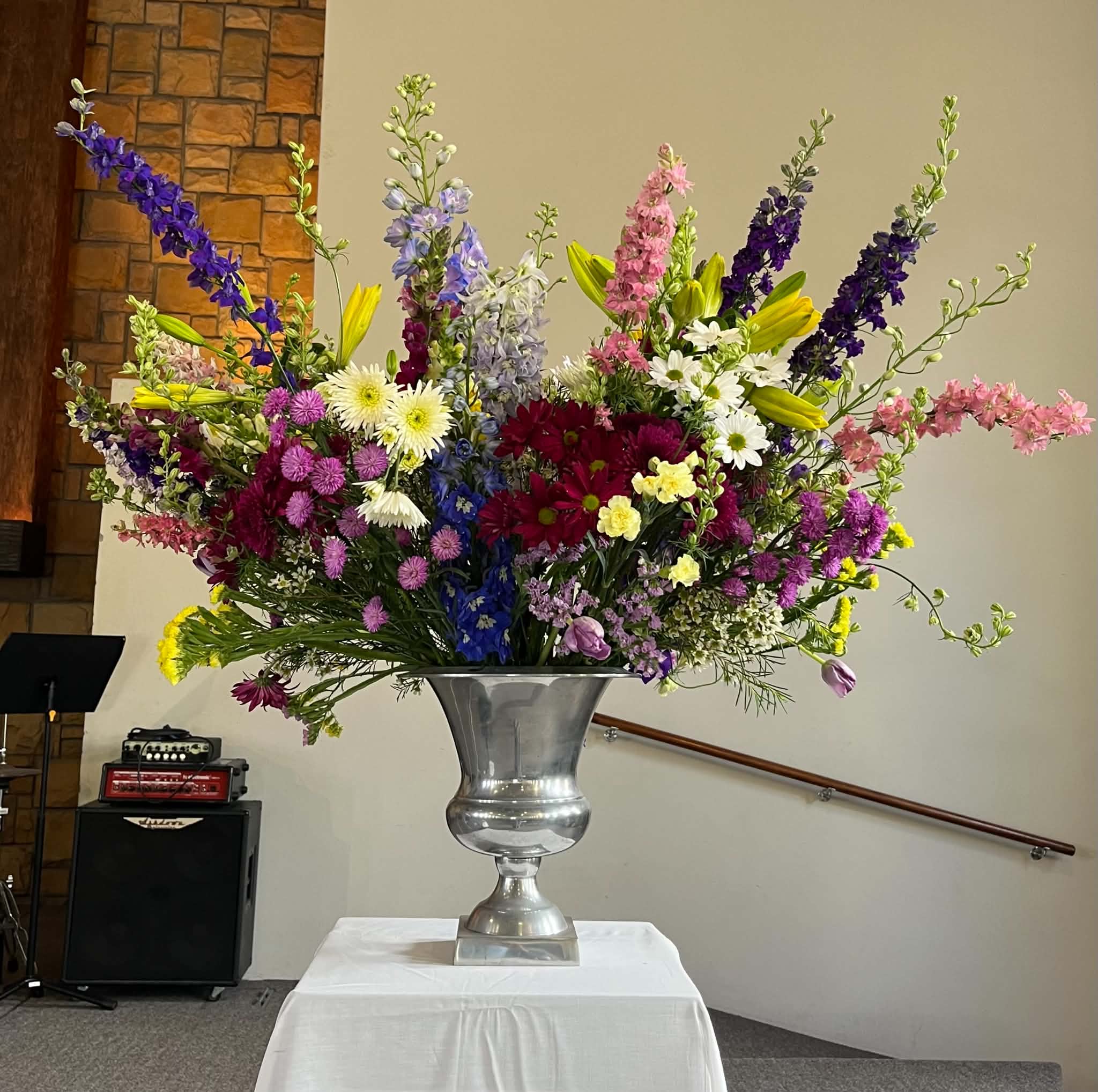
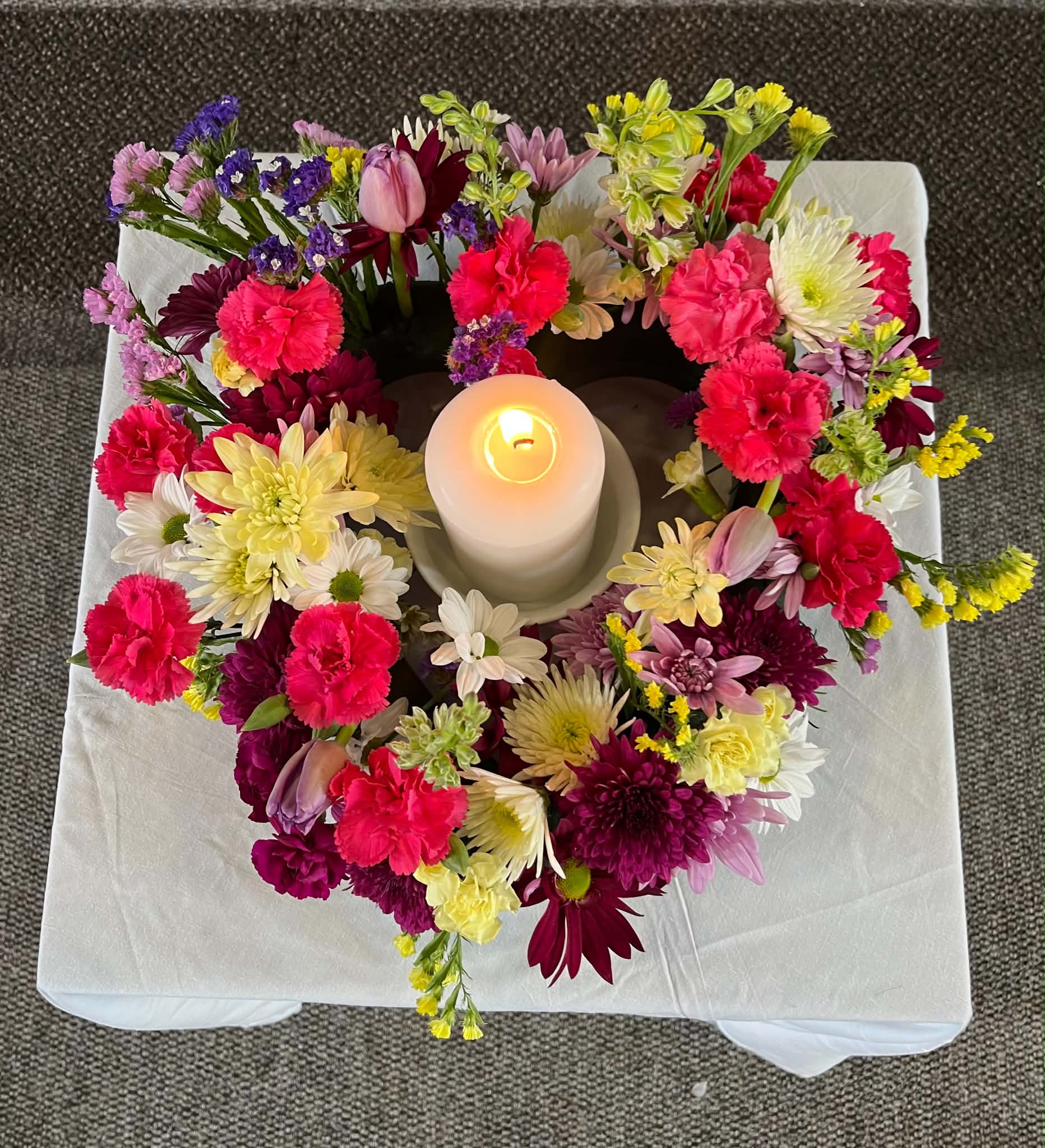
We were asked to select a flower from a range of vases on side tables and place them in a heart-shaped wreath in a gesture of remembrance that allowed us to do something more than just observe, and which created a beautiful memorial for a little girl who, despite not being with us as we’d hoped, has impacted many lives.
Tears in public are not generally encouraged, but there are occasions when nothing else will do. And God cries with us.
[Opening image from CDD20! Pixabay]

