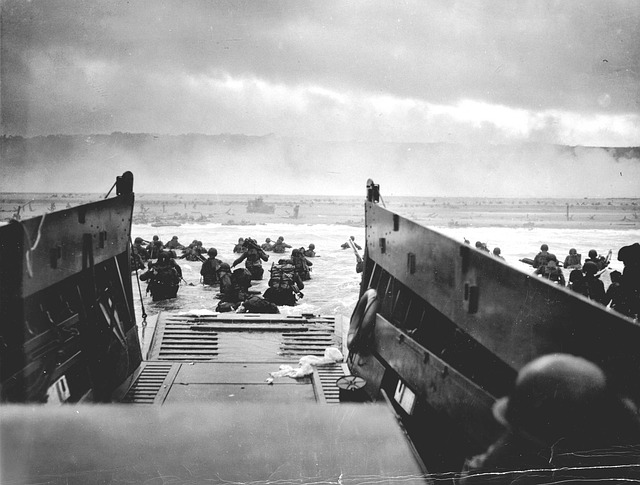
‘Let us remember those who will not come back… let us remember the men in all the services and the women in all the service, who have laid down their lives. We have come to the end of our tribulation and they are not with us at the moment of our rejoicing.’ – King George VI
6th June 1944 was the original D-Day; many maintain that it shifted the balance of World War 2 in the Allies’ favour.

Operation Neptune saw almost 7,000 craft sail for Normandy, of which over 860 privately owned boats accompanied military landing craft and combat ships. The mission included another sector of the military and the whole endeavour was code named, Operation Overlord. While the amphibious landings arrived on the beaches, about 20,000 paratroopers leapt out of their planes and drifted to earth beneath their silken parachutes to support the solders on the beach and secure military objectives behind enemy lines. The opening scenes of Stephen Spielberg’s Saving Private Ryan depicting landing on Omaha Beach communicate the mayhem, fear and courage that were brought to bear that day and helped secure a foothold in France which later led to the liberation of Europe.
Casualties were high: 4,415 Allied personnel perished out of 160,000, as opposed to 23,000 German troops in that campaign. A huge amount of manpower was required to ensure victory, aided by the fact that Hitler refused to allow his generals to make an early withdrawal.

6th June took on another dimension of significance for me on a minor scale years later when it coincided with the start of my A’Level exams. Trivial in comparison, but it’s impact on me was such that I’ll never forget it.

The date almost coincided with my five year cancer check-up this week, which carries its own significance. After five years of daily medication and its side-effects, the prospect of setting them aside is exciting. As it turns out, the appointment came through just a couple of days prior to that, but it felt rather like my own version of D-day.
And that’s what got me wondering what the ‘D’ in D-Day stands for. Death? Destruction? Drawing-the-line? I had no clue so turned to a trusty search engine. One posting assured me it simply stands for ‘Day’, but I don’t believe any military person would have come up with ‘Day-Day’ as a snappy, memorable epithet for such an enterprise. However, it’s conceivable that the use of +/- D day indicating the days each side of the planned event could make that explanation viable. Further investigation showed that some think it stands for ‘Disembark’ or ‘Disembarkation’; some suggest ‘Day of Decision’ and other’s the more likely, ’Depart Date’. I rather fancied ‘Deliverance Day’ as a statement of intent.

The truth is that there were many D-days throughout the war, specifying a variety of assault dates. They have unfolded in battles and skirmishes across the years, each a day of crucial importance to an overall strategy.
In contemporary-speak on civvie street, ‘D-Day’ is used to refer to a date on which something of huge significance – possibly on a life-changing scale – will happen. We all have them. Drawing to the end of this season of cancer treatment its own D-Day for me and, despite their insignificance now, my A’Levels might have claimed the same at the time. The results of those exams determined whatever might happen next, which did indeed set my life on a certain trajectory.
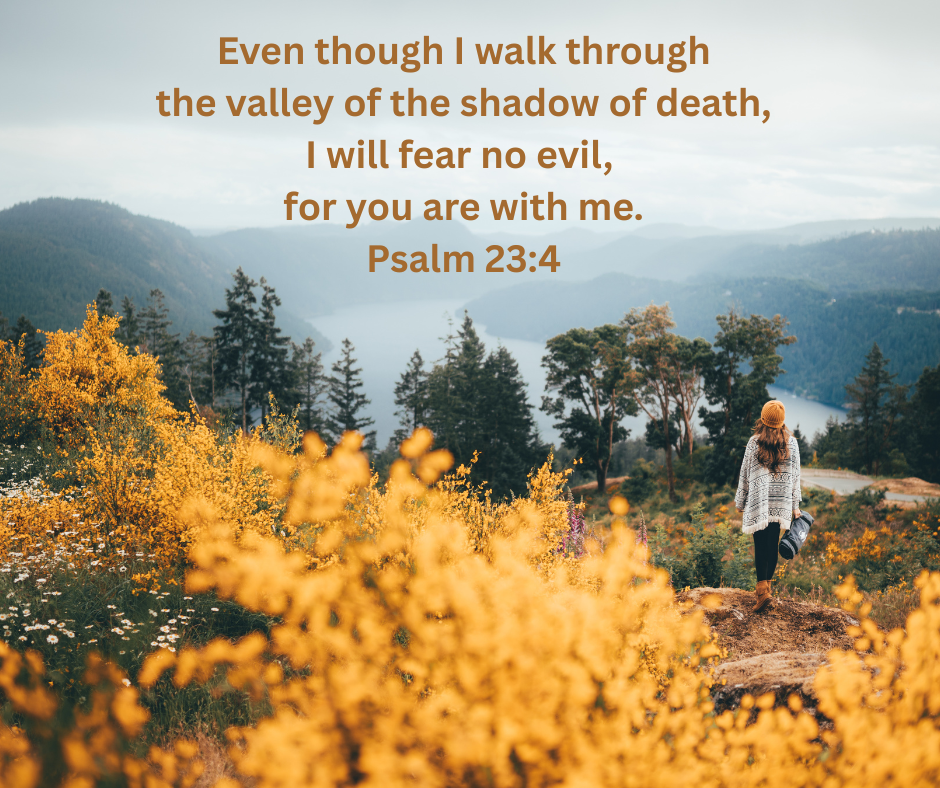
All this has got me thinking of those who face their own D-day in the coming weeks, whether that signifies medical results, exam results, or the start/ending of a particular season. I have a number of friends who are no longer expected to reach the summer thanks to cancer of various sorts. For their families, D-Day is something quite different from the activities on the Normandy beaches. However, they each have confidence in the goodness of God even as they walk through the valley of the shadow of death; a comfort and a solid hope for what’s to come. A living faith turns their D-day, when it comes, into a Destiny Day when a new chapter ushers in eternity in the company of the King of Kings.
While those left behind navigate the grief journey, none of us need take it alone. ‘Even though I walk through the valley of the shadow of death, I will fear no evil, for you are with me’ Psalm 23:4
For more on D-Day, see: https://www.iwm.org.uk/history/dday/
[Images from Unsplash & Pixabay with thanks]
 dancingthroughchaos
Thanks jen m x
>
LikeLike
You’re welcome!
LikeLike