
‘The government you elect is the government you deserve.’ Thomas Jefferson 3rd US President 1801-1809
I sat down to write this blog on 6th November, the day after the American election. Social media was going mad with people celebrating or commiserating, rejoicing or in deep mourning according to their persuasion. Some, it seemed, voted on a single issue: the economy; ‘women’s reproductive rights’; tighter immigration or the prospect of having the first woman president. For others, doubtless it was more complex.
What is evident, beyond doubt is that The Disunited States are as polarised as the Disunited Kingdom during/after/since Brexit. Reasonable, measured debate seems to have been almost out of reach for all of us as we become increasingly polarised. It’s frustrating and exhausting. We tend to admire democracy until we find ourselves on the losing side, at which point we question Mr Jefferson’s statement and hope to goodness he is wrong, wherever we live.
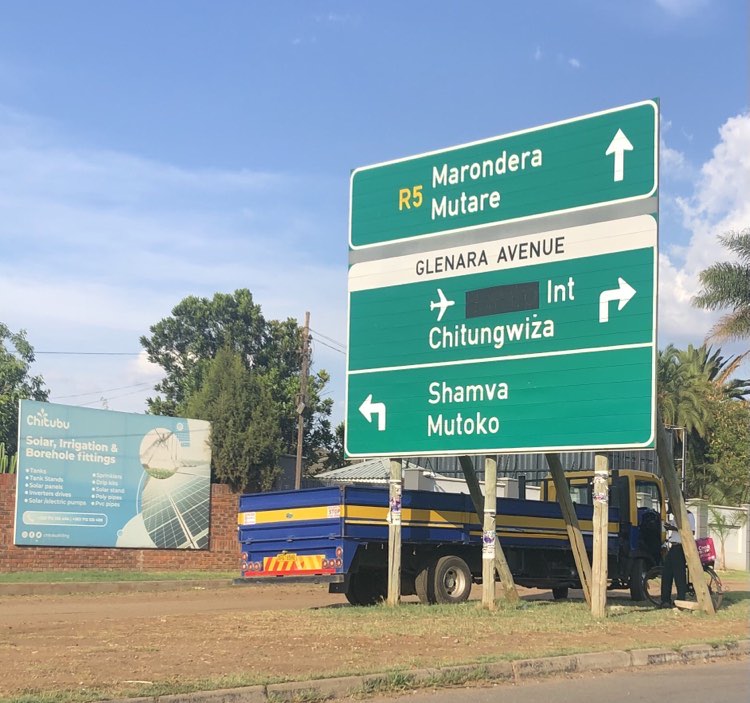
While we’re all processing our reactions and trying to understand how the outcome will affect us in our on particular corner, I spent much of today visiting an area of Harare which seemed a million miles away from all of that, and where election results of the world’s greatest superpower (for now) mean very little.
Chitungwiza is the third largest area of Harare by population. This high density suburb was built by the government prior to independence as a commuter town. Many of those houses are still standing. Approximately 411,000 people live in an area of just under nineteen square miles.

House prices have risen so much that many grown-up children still live under their parents’ roof even if they have married. That itself is tricky as, culturally, a bride price, or lobola, needs to be paid which can push a young man’s family to financial breaking point. Inflation in Zimbabwe currently stands at an eye-watering rate; the new ZIG dollar, introduced in April this year has already been devalued by over 40%. The cost of living is high. US dollars are more desirable for payment but seldom given in change. Instead, we have been offered ZIGs or, how about a biro or a few sweets?
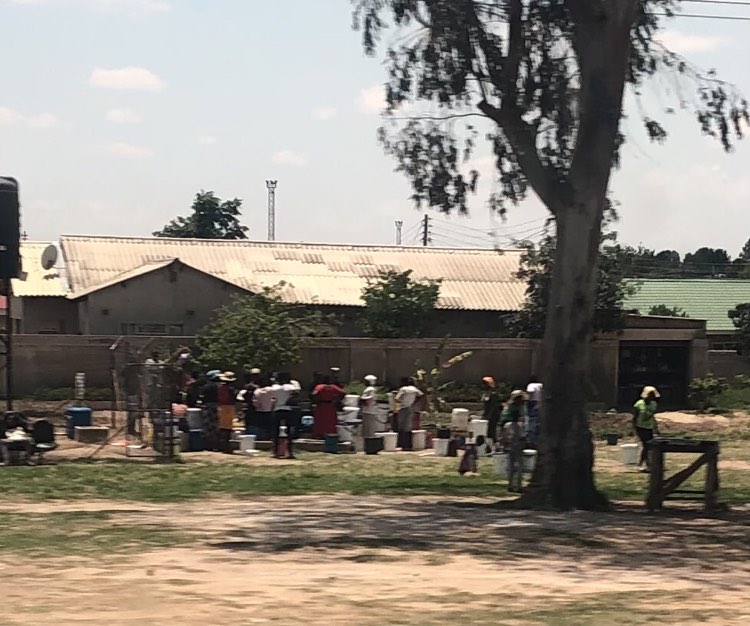
Water and electricity are not available consistently. I saw queues of people lining up at standpipes in the streets, filling their buckets in the intense heat. Some brought them in wheelbarrows, some carried them on their heads, some stacked them in the back of cars, fixing them securely with ropes before setting off over bumpy roads which are frequently more potholes than road. Infrastructure everywhere is crumbling.
In September, The Herald (local) newspaper reported that Chitungwiza has been facing severe water shortages for at least twenty years. Their correspondent estimated that the area needs 70 megalitres of water a day but is currently receiving less than 13. This is clearly unsustainable. Inevitably it has consequences for health as well as socially since women bear the brunt of giving the time required to fetch water. I read an article this week by a lady who says she arrives at her water collection point at 3.30am in order to avoid queues.
I saw sewage running down the road, but no-one was doing anything about it, and no-one seemed surprised or outraged as they would in any town in England.
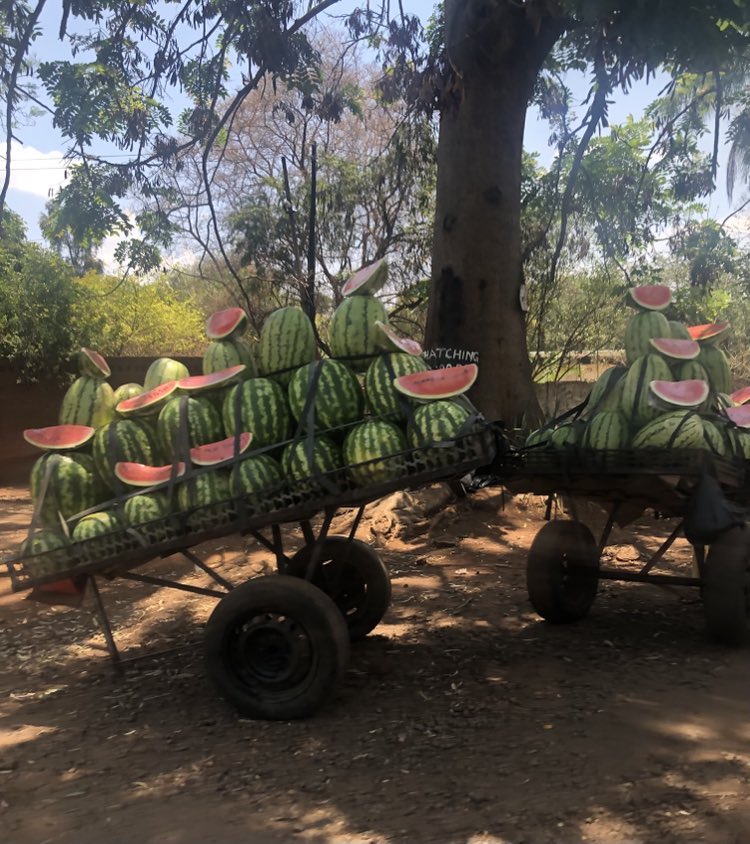
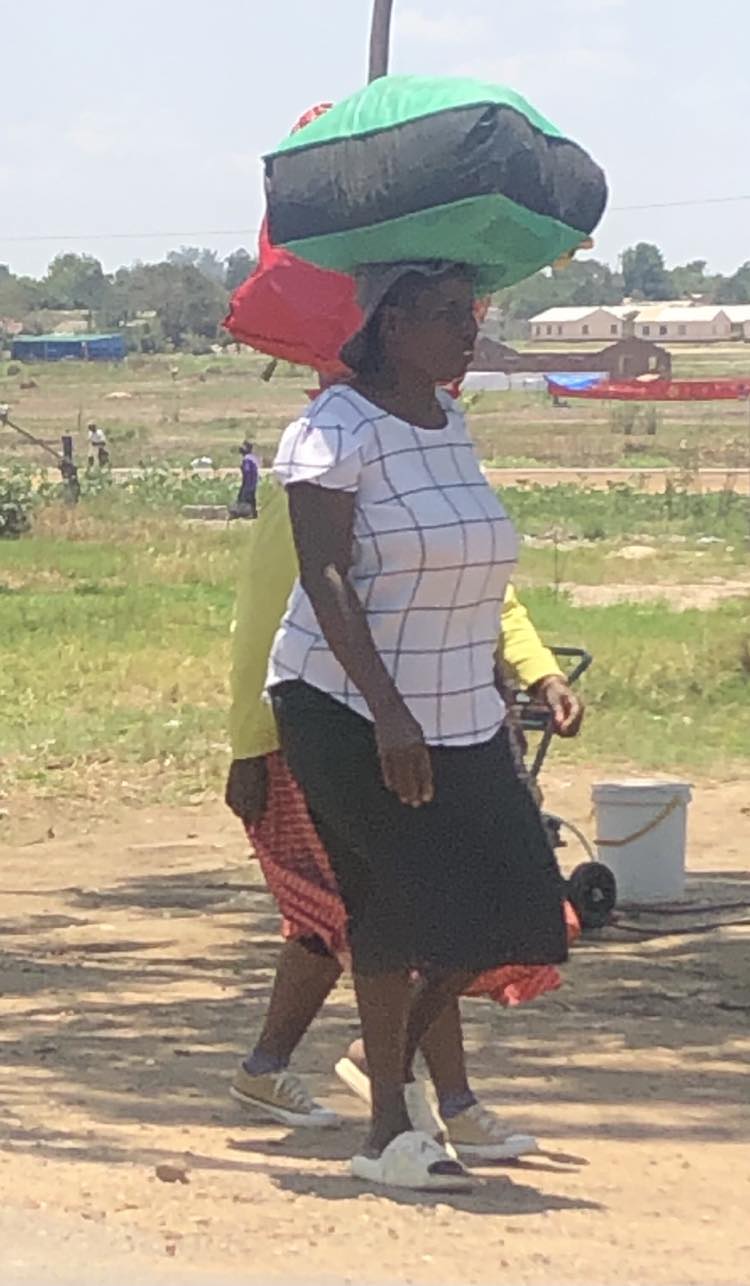
The sheer number of people operating a subsistence trade from tuck shops and by the side of the road, to the many people milling around on the pathways, told its own story about employment. Ladies shielded themselves from the sun under umbrellas; young men steered rough handcarts, transporting goods I couldn’t identify; children played in the dust. There was bustle and noise as everyone went about their business, working on a side hustle in order to put food on their table that night. People were selling tomatoes, watermelons, cold drinks, tyres, hats and snacks. Young men oversaw roasting mealies, the fragrance drawing customers, while barbers offered haircuts from tin shacks.
It was a privilege to visit my friends who live in this area. They enjoy a house they built themselves, but it’s not a house like any of the ones in your street. There’s barely any furniture at all; the walls are unpainted plaster and the floors are cement. There is no art on the walls, no lamps, no rugs and no gadgets in the kitchen. Aesthetically it’s a desert, but it’s their home and they welcomed me with the same warmth and delight as they regularly do to many people in their community each week.
Perhaps you can tell that it was a humbling and sobering experience. I’ve visited such places before, but today was a good reminder that in the UK and the USA the things that divide us are (mostly) far less important than the things that unite us. When our concerns are focused on what we don’t have it’s all too easy to take for granted, or forget what we do have.
Perhaps that sound simplistic to you, and the truth is that it probably is. Nevertheless, I hope that the contrast I saw today stays with me, not to make me judgemental of others, but to help me nurture a thankful spirit in the light of challenging days.
In January I wrote a blog about how half the world would have elections this year. As 2024 draws to a close, those have mostly happened (Chad, Gabon, Guinea-Bissau, Namibia, Mauritius, Senegal, Somaliland and Romania are still scheduled).
I’ve felt quite overwhelmed by world events this week, so it was good to be reminded that others have felt similarly over generations and found a path of hope: ‘Why are you downcast, O my soul?’ asks one ancient writer of songs and poetry. ‘Why so disturbed within me? Put your hope in God, for I will yet praise Him, my Saviour and my God.’
Rich and poor will always be with us; right and left across political divides, but there is a bigger picture. Those who hope in God have found strength and comfort in darker times than these.
 dancingthroughchaos
Thanks Jen. Helpful perspective M x
>
LikeLike
Good to hear; thank you.
LikeLike