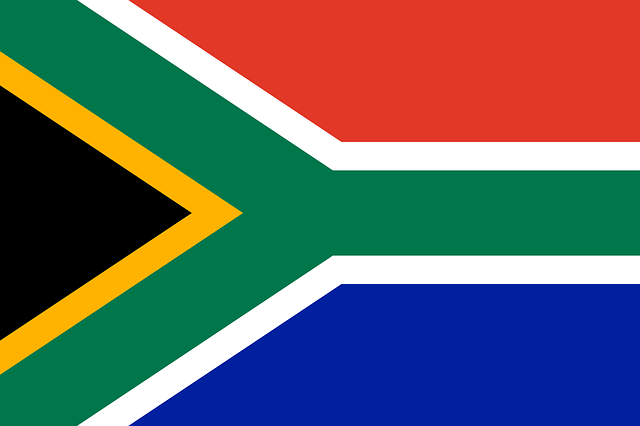
Nkosi sikelel’ Afrika – South African National Anthem and translation
Nkosi sikelel’ Afrika (God bless Africa), Maluphakanyisw’ uphondo lwayo (Let its horn be lifted up), Yizwa imithandazo yethu (Hear our prayers), Nkosi sikelela, thina lusapho lwayo (God bless, we are His family). Morena boloka setjhaba sa heso (Lord, save our people), O fedise dintwa le matshwenyeho (O put an end to the worries), O se boloke, O se boloke setjhaba sa heso, (O save us, O save our people). Setjhaba sa South Afrika – South Afrika. (The nation of South Africa – South Africa).
Uit die blou van onse hemel (From the blue of our sky), Uit die diepte van ons see (From the depth of our sea), Oor ons ewige gebergtes (Over our eternal mountains), Waar die kranse antwoord gee (Where the cliffs meet the sea),
Sounds the call to come together, And united we shall stand, Let us live and strive for freedom, In South Africa our land.
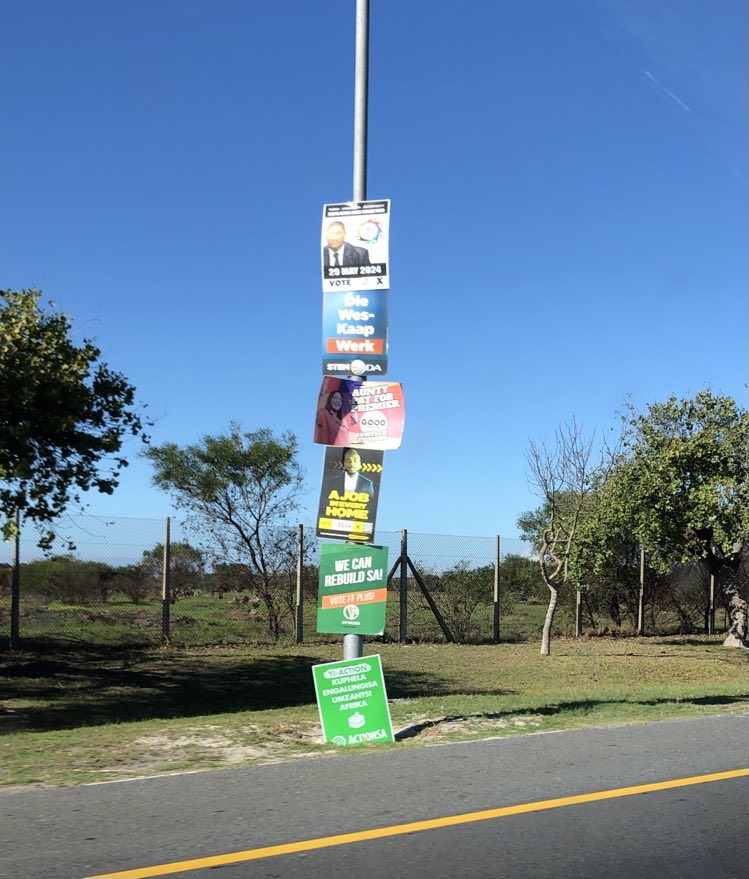
The lampposts are filling up with posters which can only mean one thing: South Africa’s election is bearing down on us with more certainty than the Citi buses that drive the red roads of Cape Town (if they haven’t been burnt out by disgruntled taxi drivers or disillusioned citizens, of whom there are many; allegedly.)
I recently wrote about how 49% of the world have elections this year, and as the world trembles at the prospect of either outcome across the pond, it’s this one in Mandela’s homeland which is the most significant in the thirty years since he was swept to power amidst celebration, jubilation (and a host of superlatives), that fills our days.
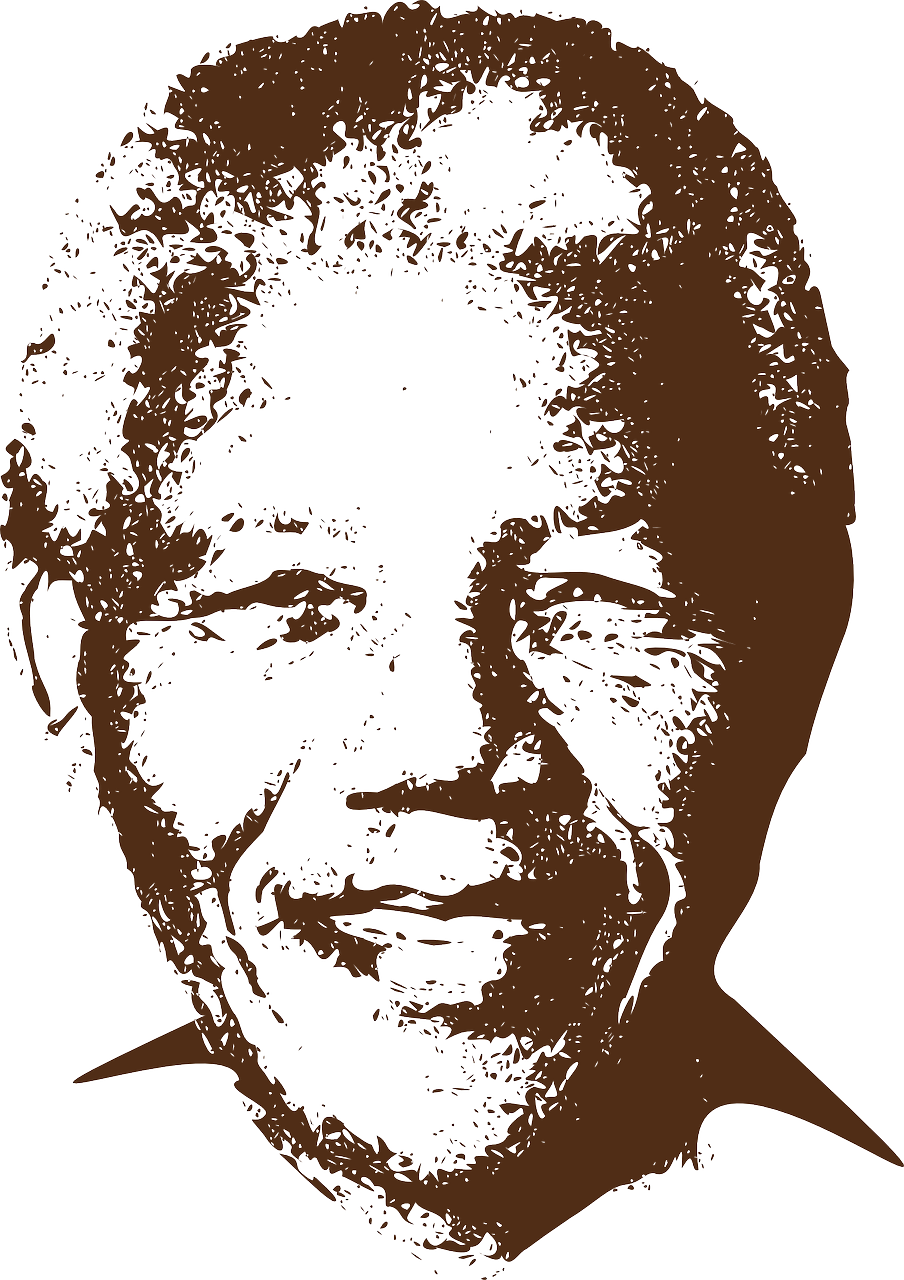
Madiba’s victory was a triumph for equality; the visceral expression of the welcome destruction of the heinous sin of apartheid, though it’s legacy lingers on in some places like a smog. The African National Congress (ANC) has been in power here ever since. It would be churlish and untrue to say they have not accomplished anything, but the dramatic reversal of fortune for ANC supporters means that while life has been sweet for those in power, for those still living in townships, or sending their children to schools with long-drop toilets and outdated textbooks, or struggling to find jobs and food, the political landscape is bleak.
In recent months, the disgraced Jacob Zuma has started his own party, brazenly taking the name of the old armed wing of the ANC, uMkhonto we Sizwe (MK), meaning ‘the spear of the nation’, which looked set to split the Zulu vote traditionally earmarked for either the ANC or the Inkatha Freedom Party (IKP, previously led by the late Chief Buthelezi).
However, Mr Zuma did jail time for refusing to testify in front of a panel investigating corruption at the highest levels after his presidency came to an ignominious end. He served only three months of the fifteen month sentence and he has been on and off the ballot for these elections more than once already.
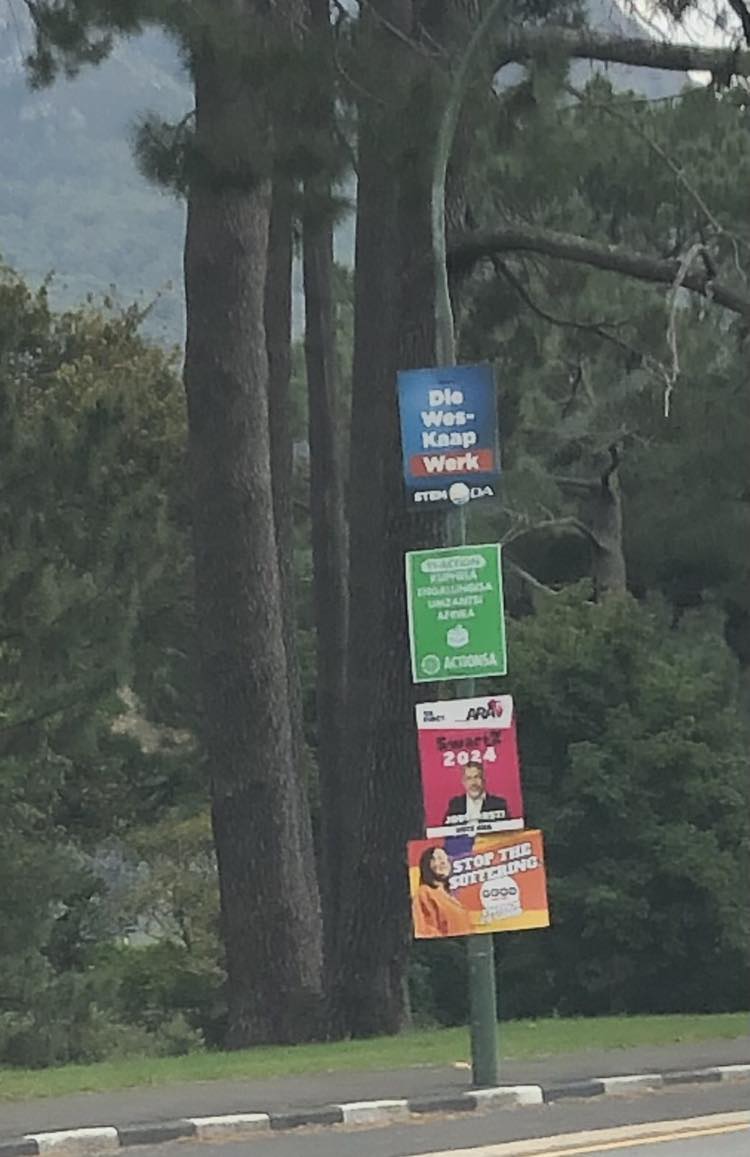
May 29th could be a real wake up call for President Cyril Ramaphosa and the ANC. He has just scrambled a new health bill through parliament, presumably in a bid to woo wavering voters. This National Health Insurance Act (NHI) aims to provide national health care for the 80% of the population who currently can’t afford the private health schemes available. So far, so great, but apparently it may cost anything between R200 billion and R1 trillion. This eye-watering sum is to be collected through tax payers. Since (conservatively) only 12% of the population appear to be paying taxes and official unemployment figures stand at 37%, this doesn’t seem to be entirely realistic.
For the first time they could poll less than 50% of the votes. In the 2019 elections they garnered 57.5% and were considered lucky to do so. Five years ago the runners up were the Democratic Alliance (DA) with 20.77% followed by the Economic Freedom Fighters (EFF) led by the fiery ex-ANC youth leader Julius Malema, with 10.8%. Granted, there were 45 other parties on the ballot sheet, eleven of whom secured at least one seat in parliament.
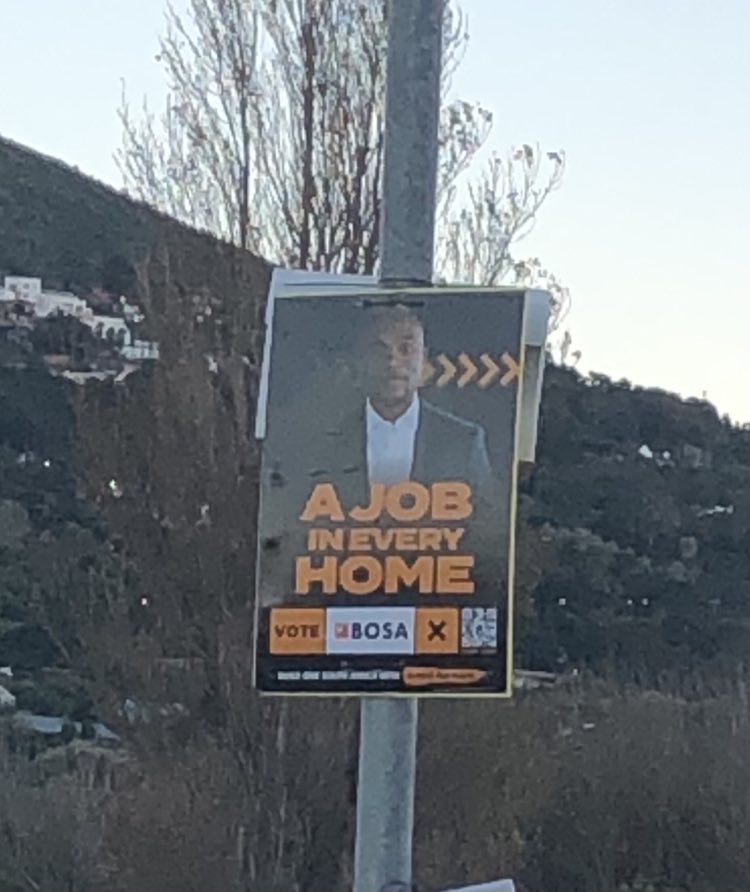
However, this time there may be even more parties offering to fix the country, supply jobs in every household, stop the corruption, build houses and who knows what else or whether any of it can actually be done. The general feeling seems to be that if the ANC were going to do it, they’d have done it by now. The challenge will be what happens if the ANC have to forge a coalition. Please God, it won’t be with the EFF; the DA refuse to contemplate it.
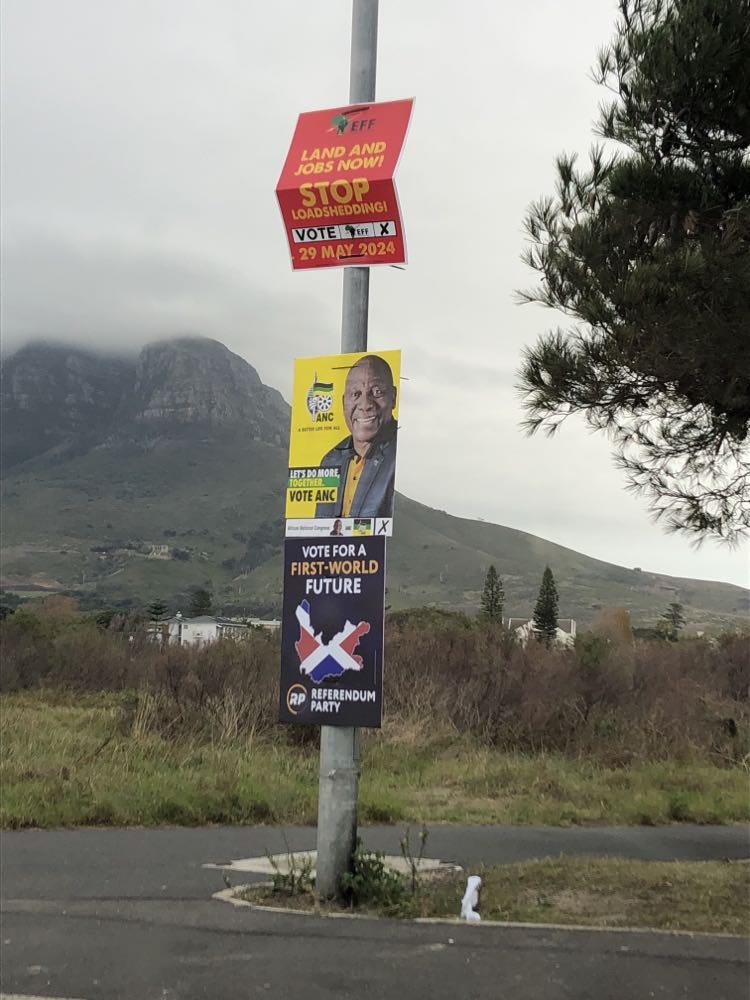
Meanwhile, people are still flocking to both Gauteng and the Western Cape in a bid to find more reliable power supplies, clean water, lower violent crime figures, jobs and fewer potholes. 87,553 people moved to Cape Town in the last year which may explain the ongoing challenges of traffic and the pressure on infrastructure which is exacerbated by the presence of a thundering great mountain in the middle of the city .
Why my interest in all this? By a curious twist of logistics, I arrive back in the UK from South Africa on the morning of these elections. I thought they would be over and done with earlier this month and we’d all be emerging from the fallout, but it was not to be.
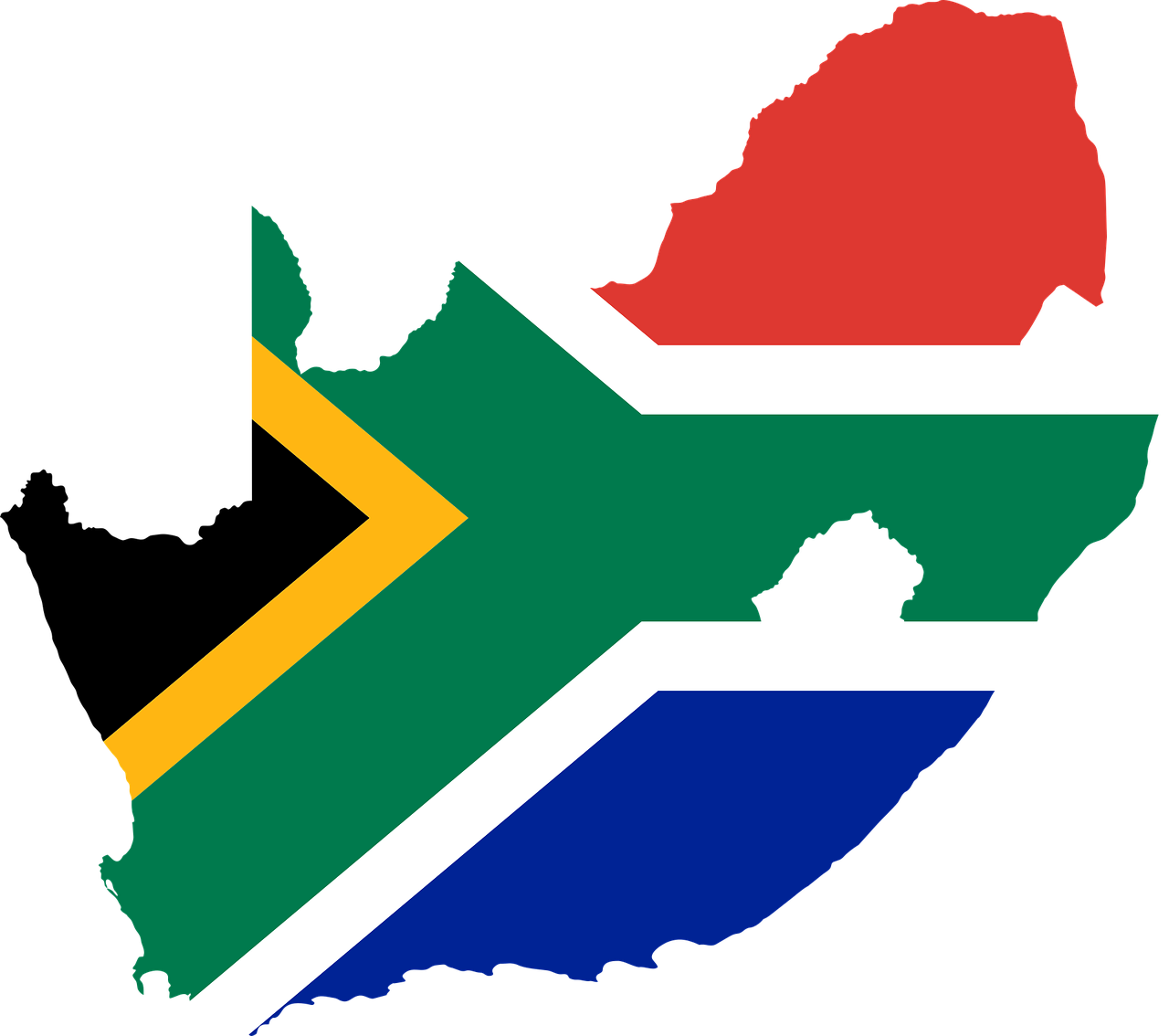
On paper it all looks rather bleak, hence my decision to refer back to the stirring national anthem which we saw belted out with such passion on the rugby field last year (Siya Kolisi would be a dead cert for President should he ever decide to venture into politics). In three languages it asks God to bless the nation and for her people to stand together, united as one. That’s a prayer I, and many others, would like to see answered both here and beyond.


Praying for that great nation. Ben is hoping to get to Nigeria this year in the other end. Another great African nation plagued by corruption and uncertainty. Thanks Jenny for the timely reminder to pray (even we have them in 3 weeks!)
xx
LikeLike
Nigeria is a whole other level…! Thanks for your prayers, James. I’ll be watching with interest both for SA and for France. Looks like the UK is holding out until the autumn.
LikeLike