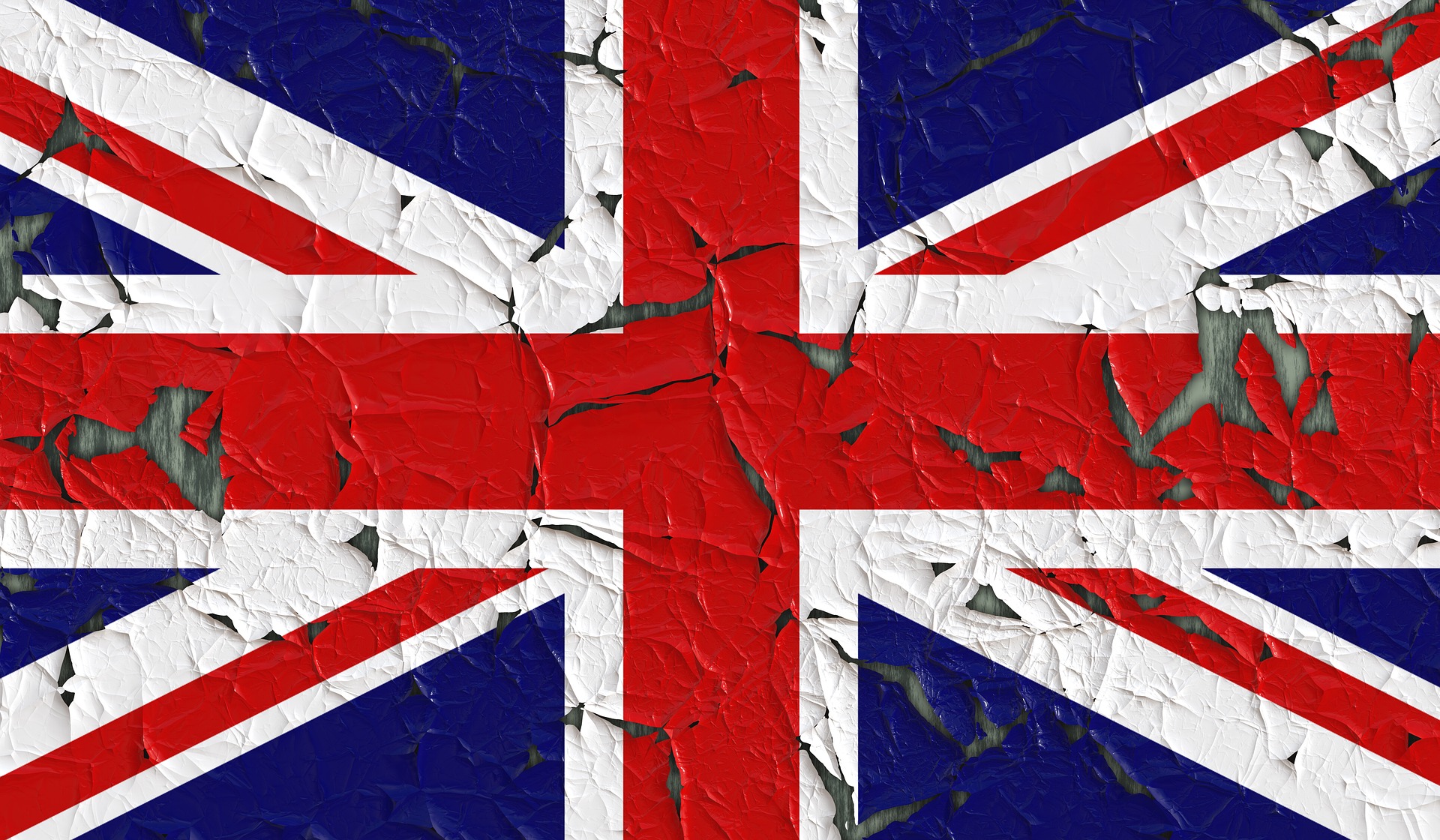
‘All empires think they’re special, but all empires eventually come to an end.’ – Patrick Wyman (host of The Tides of History podcast)
I posted a more serious blog a couple of weeks ago about standards in public life, which then got me thinking about government, nations, and the wider picture.
Recognising that none of us is as objective as we’d like to think – thanks to all our filters, assumptions etc, plus a deluge of highly suggestible, fear-inducing and ever-changing news feeds and shifting opinions – it can be hard to see the wood for the trees. Right now, Twitter is abuzz with the fall-out from various campaigns which have left Budweiser Light nosediving, and a call to boycott Nike’s sportswear.
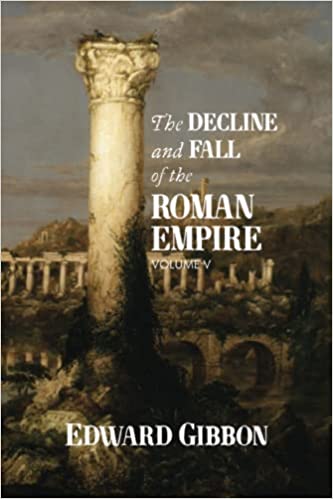
While the West is wrestling with what used to be straightforward biology, in other parts of the world, people are just trying to stay alive, and put food on the table. Everything in Europe appears to be crumbling. It’s this that put me in mind of fallen empires. We’ve all heard of, though less likely to have read, Edward Gibbon’s famous six-volume work, The History of the Decline and Fall of the Roman Empire. I wonder whether it’s a coincidence that it was published in 1776; the same year as the American Declaration of Independence…
Journalists, philosophers and some of the people in both your street and local pub, are asking – understandably – whether this is the end of everything; I’ve begun to wonder with them.
The question which has been uppermost in my mind is whether there are any similarities, or patterns, in civilisations and empires that collapse. It’s not the most appealing area of study, but surely someone has done some comparisons.
Sure enough, army General and historian, Sir John Bagot Glubb (no, I didn’t make that up), wrote a book which was published as recently as 1978, called: The Fate of Empires and the Search for Survival. In it he examined eleven empires, from the Assyrians in 859BC, to the British Empire which he cited as ending in 1950. Some would say that it actually ended in 1957 with the Suez crisis, while others might put it as late as 1997, when Hong Kong was returned to China.
Sir John estimated that each empire lasted for the duration of ten generations; but even that depends on how long you estimate a generation to be: fifteen, twenty, thirty years? There doesn’t appear to be a definitive answer.

However, he also noticed similarities over the lifetime of an empire, which he categorised into seven stages, as follows:
- The Age of Pioneers (Outburst)
- The Age of Conquests
- The Age of Commerce
- The Age of Affluence
- The Age of Intellect
- The Age of Decadence
- The Age of Decline & Collapse
I wonder where you think we are on this journey in the UK, in the USA, or in the West as a whole.
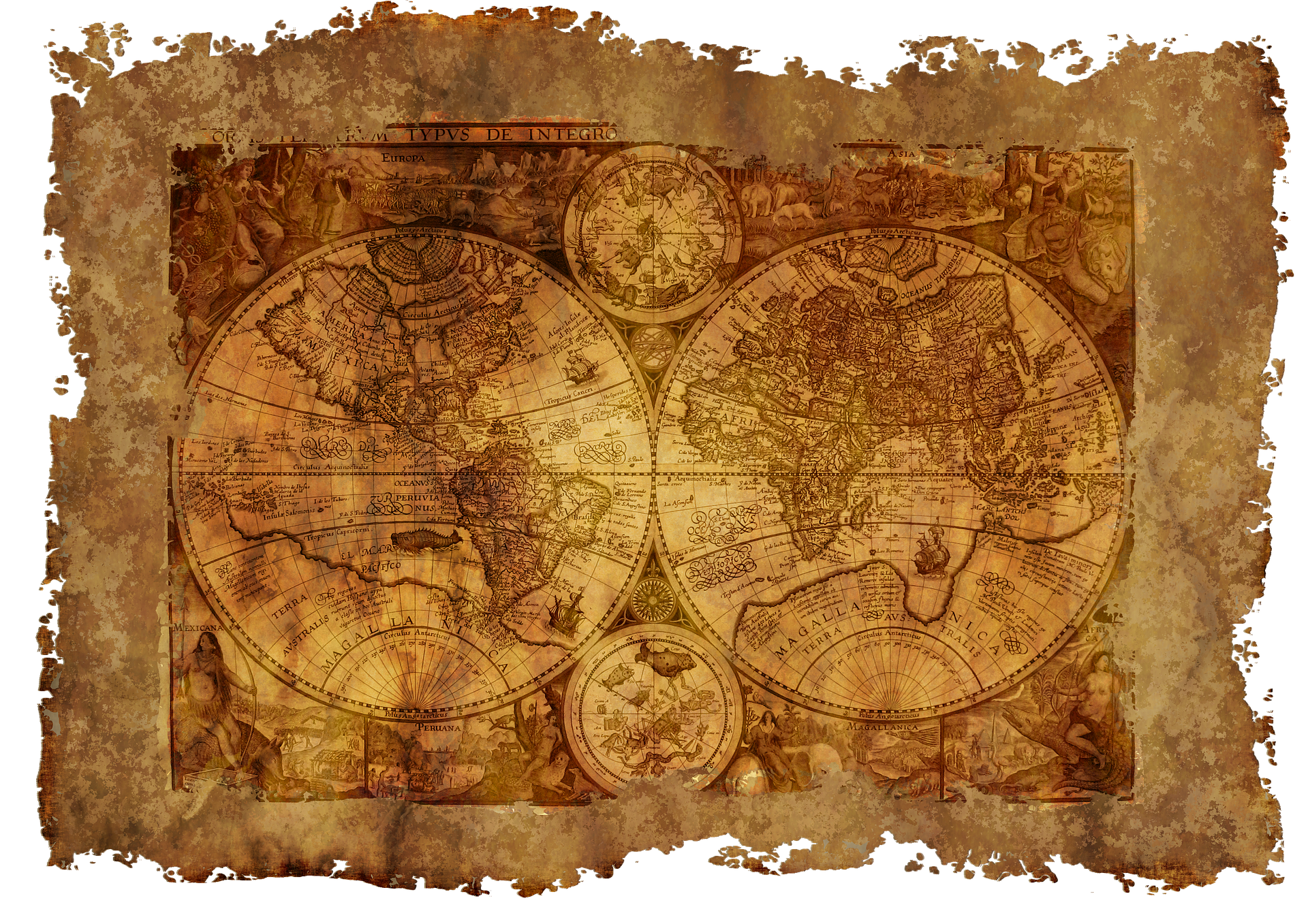
Emerging from the Dark Ages, the Hundred Year War, and the rise of the Tudors, our pioneers set out in the sixteenth century, when British maritime success saw explorers circumnavigate the globe and ‘discover’ new lands into which we could expand. We co-opted their raw materials and resources for our own ends, which in turn propelled us towards the Industrial Revolution, and a new era of trade, commerce and wealth, during which we expanded our own infrastructures. The nation’s health, education and working conditions improved enormously, and the general standard of living went up significantly.
All this, naturally, fed into a national culture of superiority over other nations, and a thirst for the academic knowledge which had become rapidly more accessible. Darwin came along, and, ditching much of the old, the nation embraced science as the solution to all our problems, only to discover that it wasn’t.

That very over simplified explanation (from myself, not Sir John, I hasten to add), throws us inexorably into the last two stages of the cycle, if we’re going along with the good general’s findings.
Number six is The Age of Decadence, defined by Study Smarter as: An age of complacency when the state often falls into debt, neglecting the lessons learned in the foundation of the empire.
Well, it’s certainly difficult to find much initiative for actioning foundational change, apart from online ranting and wishful thinking. The economy is clearly not in good shape. Covid saw us bleed money into PPE that didn’t actually work, or wasn’t suitable, and the proverbial baby definitely seems to have been thrown out with the bath water as social media artificially amplifies an agenda and culture which trashes the values of the past. Politicians continue to lie; double-standards have subtly become acceptable, along with behind-the-scenes corruption, and the investigations into our no-longer-trusted police force.
Clark Grey Howell, author and entrepreneur, defines the age of decadence, quoting and expounding on Sir John’s theories: Defensiveness, pessimism, materialism, frivolity, an influx of foreigners, the Welfare State, and a weakening of religion. To what did he attribute this decadence? Too long a period of wealth and power, selfishness, love of money, and the loss of a sense of duty. Interesting, if controversial.
The triple combination of internal division, external threats and natural disasters (global pandemic, anyone?) are cited as consistent factors in the decline of any Empire; so we’re going for a full house here.

The UK has been divided between classes, north and south, economically, as well as politically, for years. Brexit brought it all into sharp focus, but it’s been bubbling along for years. The current reluctance to debate anything, has not helped, but it seems that we’ve never been more polarised.
The Russian invasion of Ukraine last February, brought war onto our European doorstep. We’re definitely not as comfortable or as secure as we were, which suggests perhaps we’ve already slipped into that final age of decline and collapse.
Decline happens when the old power is removed or subverted by either an internal revolution or an external power.
One commentator I read, wrote: Historians will look back at some enormous disaster, either ongoing now or in the decades or centuries to come, and say it was just icing on the cake. The foundation had already been laid long before, in the text of legislation nobody bothered reading, in local elections nobody was following, in speeches nobody thought were important enough to comment on, in a thousand tiny disasters that amounted to a thousand little cuts on the body politic.
While I find all this both illuminating and sobering in describing our current socio-political dilemmas and unravellings, I don’t find it very hopeful. For that I need to look to a completely different kind of – not empire – but kingdom.
Over 2,500 years ago, a reliable prophet had a vision of successive empires stacked on top of one another. Each was smashed to pieces by a mysterious rock which struck the hybrid statue, toppling the whole thing. That rock then grew and filled the world. It was interpreted as being God’s Kingdom.
It was the Christmas angel, Gabriel, who came to Mary and spoke about her miracle child who’s Kingdom would never end.
There’s a radical difference between a self-serving empire with its characteristics of power, wealth and control, and God’s kingdom, recognised by its desire to serve others, empower and release people from a life they weren’t designed for. It includes forgiveness, and a change of heart, loyalties and priorities. I know for sure which one I’d rather be part of.
Images from Unsplash and Pixabay. Thanks to: Pete Linforth, Coueleur, Gerd Altmann, Victoria Museum, Stefan Schweihofer, and Falco.
 dancingthroughchaos
Absolutely we are in the Age of Decadence, and the Age of Decline and Collapse is beckoning, what with the threat of AI and nuclear weapons. But the picture is also complicated – we’re still reeling from the bloodshed of the 20th century, two major world wars, the horror of genocide and the long-term effects of the terrors unleashed by the Terrible Twins of Fascism and Communism. Yet the Western world recovered from WW2 and rebuilt itself … only to start fracturing 80 years later.
Jesus said that his kingdom was not of this world. All earthly empires crumble to dust. Only his kingdom of justice and joy will endure, and our final destination is the New Creation.
LikeLike
You’re absolutely right. Other European nations experienced bloody revolution where Great Britain experienced a spiritual revival. I think that’s made a big difference, as has having had a Sovereign whose faith at the helm (albeit somewhat symbolic in terms of wielded power) was authentic.
It’s certainly interesting living during another period of historical transition but with a wider perspective.
LikeLike
This article gives a great insight as to where the UK stands, and probably western Europe as a whole. As someone who has enjoyed history, I find it both accurate and chilling, yet strangely exciting. Was ‘the world’ ever ours to begin with? Not a bit of it! It’s good to belong to the man still in control, adn who’s kingdon is everlasting. Thanks Jenny
LikeLike
Thanks, James. It’s been fascinating to think about, rather unnerving to watch, but I’m still persuaded that we’re here for such a time as this.
LikeLike