‘The great gift of Easter is hope’ – Cardinal Basil Hume (1923-1999)
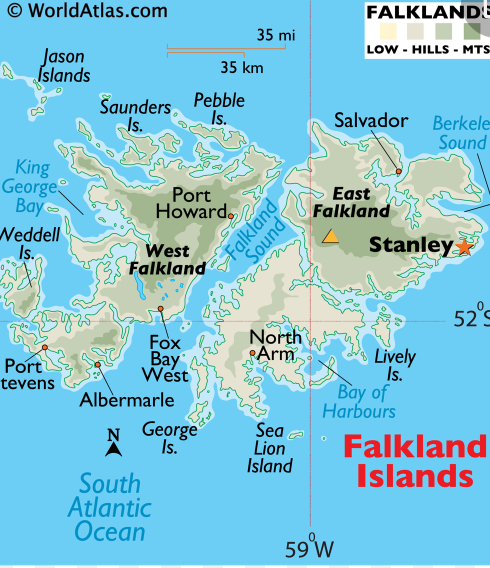
Less than two of weeks ago, Britain noted the fortieth anniversary of the Falklands war. Whether you call it the Argentinian invasion of the Islas Malvinas, or the British liberation of these tiny islands in the south Atlantic, I wonder what you remember of that time?
2nd April 1982 was a Friday; I remember that because I was in the 6th form at the time, and on Friday afternoons all the English A’level students were brought together in the lecture theatre to listen to a member of staff unpack the intricacies of poems: sonnet, narrative, pastoral, epic, idyllic, modern etc, we covered them all. Most of the famous poets were represented over the two years of study, and this format was part of preparing pupils to transition to the format of university studies.
I don’t recall which poem we had discussed that afternoon, nor which of our colourful teachers brought her insights to it that day; but I do remember that I was carrying my English file through our house from the kitchen to the sitting room later that night, where my mother was watching the evening news.
The pictures unfolding on the screen, the sonorous voice of the newscaster and the insistent voice of Margaret Thatcher all brought me to a standstill. Was this, I wondered, how she must have felt as a child in 1939 when Churchill’s familiar gravelly announcement of war with Germany was declared? Would this be the same; the war for our generation to navigate with the same courage and tenacity with which my school books told me her generation had done?
In fact, the Falklands war lasted 74 days during which we watched the Argentine vessel The General Belgrano sink having been torpedoed by British submarines, and the horrific aftermath of the UK ship Sir Galahad which was bombed by the enemy. Forty-eight men died in that encounter, mostly burnt alive. Along with the rest of the country, I remember watching the miraculous rescue and subsequent survival story of Welsh Guard Simon Weston, who came home with 48% burns to a mother who didn’t recognise her son.
As the Ukraine-Russian war comes into its fiftieth day today, I wonder how many teenagers felt the same emotional jolt in February that I did that day in 1982 when I was stopped in my tracks.
We wondered how safe we really were then, and we still do now. We questioned whether our leaders knew what they were doing; we still do now. We asked whether this was the beginning of the end for our beautiful, frustrating, conflicted planet; we still do now.
With the approach of spring, the promise of warmer, brighter days; the lifting of travel and Covid restrictions, and the coming of Easter, we have reason to hope. But hope for, or in, what, I wonder? That the seasons will unfold as they have been programmed to do for millennia, or that life will become easier, or better, despite the conflict in the east, the increased cost of living and the grim headlines about fuel and energy prices?
It seems that every generation is somehow plunged into conflicts from which we learn very little apart from how truly dreadful we can be to one another. Once again, we need help; we need rescuing from ourselves. History reveals that we have nothing in and of ourselves which can deliver us in the long-term from our own foolishness, our love of power and our innate selfishness.
Easter tells us another story: while we couldn’t save ourselves, Jesus came to do just that. This season reminds us that it was God’s great love for us that moved Him to provide a once and for all open door to forgiveness, intimate relationship with Him and a new way of living in which we return to the Maker’s instructions and undergo spiritual heart surgery. Drastic, and more revolutionary that a physical operation – one which is more radical than simply turning over a new leaf – this requires that we surrender our will to His. It’s not for the faint-hearted and it doesn’t come with a guarantee for an easy, trouble-free life. However, if we can lay aside our offence at the cross, and our distaste for a solution which doesn’t have ourselves as the protagonists, then we will discover a real and living hope for both this life and the next based not on imagination or fantasy, but in the certainty of a risen Saviour who promises to walk through life’s storms, conflicts and dark valleys with us; not just observe from a distance.
What an amazing situation; worth celebrating, not just at Easter and Christmas, but every day of the year.
 dancingthroughchaos
This is beautifully written, Jenny. I was also in 6th Form that year, though not studying literature or English.
The threat and reality of war does mark us with its brutality. Who’d have thought two years on that the war in Ukraine would still be here?
LikeLike
Thank you, Dawn. I know what you mean. I feel very heavy-hearted that so much history repeats itself, albeit dressed in different colours. God’s heart must break at our folly.
LikeLiked by 1 person
Amen
Thanks Jen
M xx
>
LikeLike
Interesting how some of these events all weave together, isn’t it?
LikeLike
Very thoughtful post.
I was at university during the Falklands War and I had a rather different reaction to it. I was vehemently anti-Thatcher (typical student! – although my opinion of her hasn’t changed much) and irritated by the ‘Empire strikes back’ attitudes in certain sections of the press.
Time has softened my views. I acknowledge the awful losses of men on both sides. And the war had, in a way, a positive outcome for Argentina in that its failure led to massive protests against the brutal military junta, leading to the collapse of that particular dictatorship.
I would not compare the 1982 war to WW2 or Putin’s brutal invasion of Ukraine. Britain itself was not facing an invasion, unlike the truly horrific possibility of a Nazi conquest back in 1940. Obviously the Falklands islanders would have felt differently. Even so, it wasn’t a world war on the same scale. I was infinitely more worried about the prospect of all-out nuclear war between the superpowers. Putin has raised that horrible spectre again. 😦
“However, if we can lay aside our offence at the cross, and our distaste for a solution which doesn’t have ourselves as the protagonists, then we will discover a real and living hope for both this life and the next based not on imagination or fantasy, but in the certainty of a risen Saviour who promises to walk through life’s storms, conflicts and dark valleys with us; not just observe from a distance.” Yes, indeed.
LikeLike
You’re so right, Philippa. Had I been a few years older at the time, I imagine that my thoughts would have followed your line more closely. What stood out for me most back then, was simply the idea of being at war with anyone, anywhere; an idea which, up until that point, I had imagined was consigned to the history books for evermore. How naive I was!
LikeLike