
‘…the light that darkness cannot handle’ John 1:5 (contemporary interpretation)
It’s said that writers paint pictures with their words. So then, it must be true that painters give us poetry and prose with their colours. Oils, watercolours, pastels, chalk, charcoal etc – all the mediums within the reach of artists work themselves out on canvas or board to bring vivid images to life under the hand of a master.
I didn’t know very much about artists until my friends and I began to play the board game Masterpiece when I was about 11 years-old. It involves a set of postcard-sized reproductions of 24 of the most famous paintings in the world. These are paired (differently every time if you’ve shuffled well) with other postcards bearing the supposed value of said paintings from £150,000 to the all important £1million work. Amongst them all will be two forgeries. Players work their way around the board until all the paintings in the bank have been auctioned to the players vying for ownership while trying to remember the odds on the value of the remaining pile depending on what they’ve also inherited or bought and sold from each other, and what is lurking in their personal collection. The player with cash and assets to the highest value is the winner.
Hours of Sunday night sessions gave me a familiarity with those two dozen master pieces. Finding the game in a charity shop years later reminded me of the hours happily spent and it became a staple in our own household. It also made a trip to The National Gallery come alive as we set out to see which ones we could find hanging on those illustrious walls.
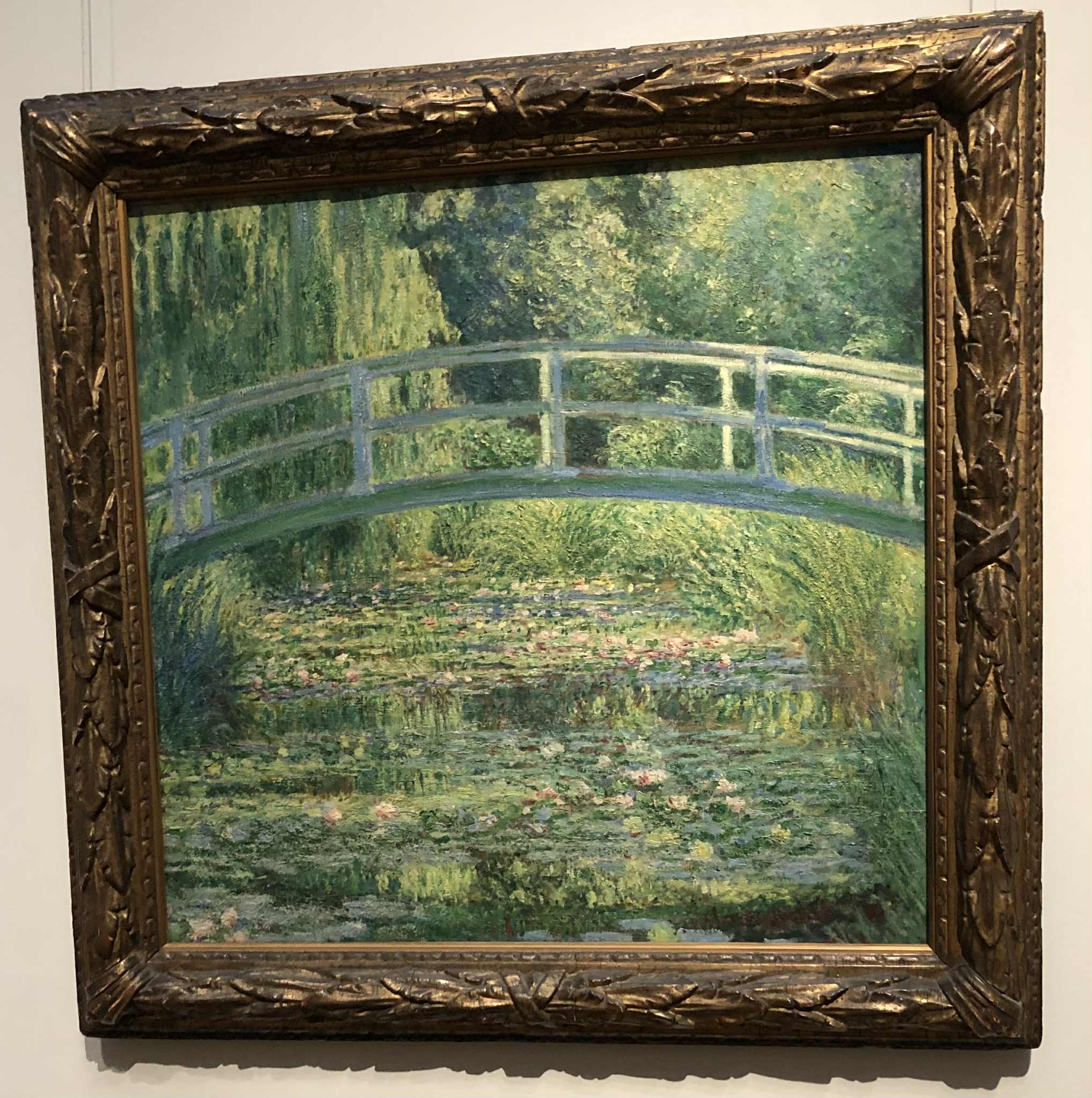
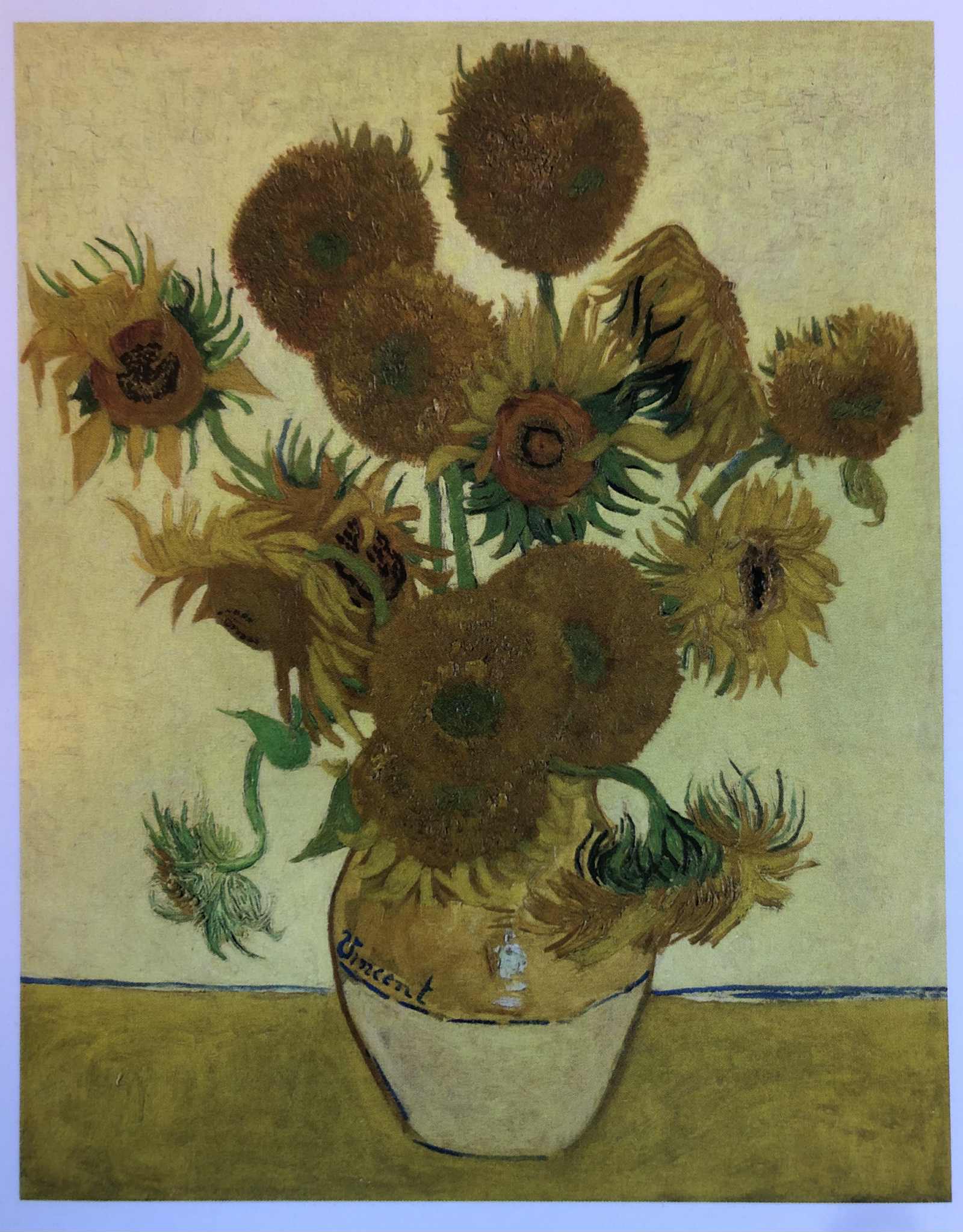
I spent a couple of happy hours there again last week, where my terrible sense of direction was repeatedly challenged. I always enjoy seeing one of Van Gogh’s Sunflower paintings – is there anything more cheerful (especially on a freezing winter day) than his bright yellow daubs arranged in a vase? Monet’sWater Lilies is a favourite; I could spend a long time gazing at this one (providing I haven’t taken yet another wrong turn in the maze of rooms). Like those once popular 3D puzzle pictures, if you let your eyes go slightly out of focus, the water seems to move as the light dances across it. Very satisfactory.
On this visit I made a new acquaintance with an artist not featured in my childhood game. My eye was caught by a series of paintings in which the light was captured in an extraordinary way. I was captivated and lent as close as the alarms would allow to try to see how the artist had converted paint into ethereal light in such a magical way. I am none the wiser, but can add Claude to my list of favourite artists. A seventeenth-century painter, originally called Claude Lorrain, he spent most of his life in Italy focusing on landscape painting. It seems that commissions from the Pope between 1635-1638 secured his place, popularity and further work. Handy.

As a writer, I spend a great deal of time searching for the right word to convey not just a basic meaning but the nuance of what I want to say to bring those words to life while trusting for a connection between the page and the reader. Presumably, in the same way, painters furrow their brows over perfecting the right shade and blending their colours in combinations that lift the piece, injecting aesthetic life that leaps from the canvas to the perceptions of the viewer.
As we plunge into the season of Advent and the pre-Christmas scramble to get on top of everything, I enjoyed the opportunity to take some time away from the coming festive chaos. Not only that, but Claude’s success in depicting light in his paintings in a way that drew me in 400 years later gave me cause to consider the Christmas story in a fresh way.
The traditional nine lessons and carols we’ll hear in services around the country very soon, ends with the passage from the gospel of John chapter 1 and the weighty words referring to Jesus: The true light that gives light to everyone was coming into the world.
When God wanted to shine His light into a dark, confused world, He didn’t send a painting, He sent a person; a Saviour. The choir of angels who lit up a dark night for bleary shepherds announced His arrival in a Bethlehem backwater. Even Claude might have struggled to replicate that scene, but the good news is that Jesus, The Light of the World, is still bringing His light, hope, joy and peace to a world that’s just as confused, broken and reaching for answers as it ever has been. Not confined to a still life painting hanging on a wall, hundred of thousands of people will celebrate the vibrant reality of His incarnation and ongoing relationship with humanity this Christmas. I’m delighted to be one of them.


 dancingthroughchaos